
Paving the Way to Support Texas Parents and Early Learners
The Governor’s Task Force Addresses Governance Challenges of Early Childhood Education and Care.
- Related Services:
- Lobbying
- , Policy Development
- , Coalition Building
“The reason why we passed this bill is because of the importance of helping parents across the entire state be able to access quality and affordable early childcare and child education for their children. The goal [of HB 117] is to evaluate childcare and early learning programs across all state agencies. We must put an end to the endless bureaucracy, unclear standards of care, and inflated costs that make it difficult for parents to get the early childcare and education that they need.”
– Governor Greg Abbott HB 117 Bill Signing (2025)
The Problem
Texas’s current early childhood education (ECE) governance structure is fragmented, spanning across 9 different state agencies. Initial state efforts, such as the establishment of the Texas Early Learning Council (TELC) (2010–2013), laid the groundwork for cross-agency collaboration, workforce development, and early data system exploration, but did not establish formal governance or sustained alignment across programs. Without a single entity accountable for improving and connecting the ECE system, Texas has struggled to address the needs of children, parents, and employers. Such fragmented governance of ECE programs has led to negative effects on:
- Parents who face a disjointed system with multiple applications and limited visibility into available, high-quality and affordable childcare options in their community;
- Students struggle with kindergarten readiness due to a lack of access to high-quality early learning options with only half of students entering school with strong literacy and numeracy skills in 2025; and
- Providers must comply with multiple agency regulations that are often unclear and duplicative, reducing efficiency and limiting provider participation in funded programs.

Our Approach
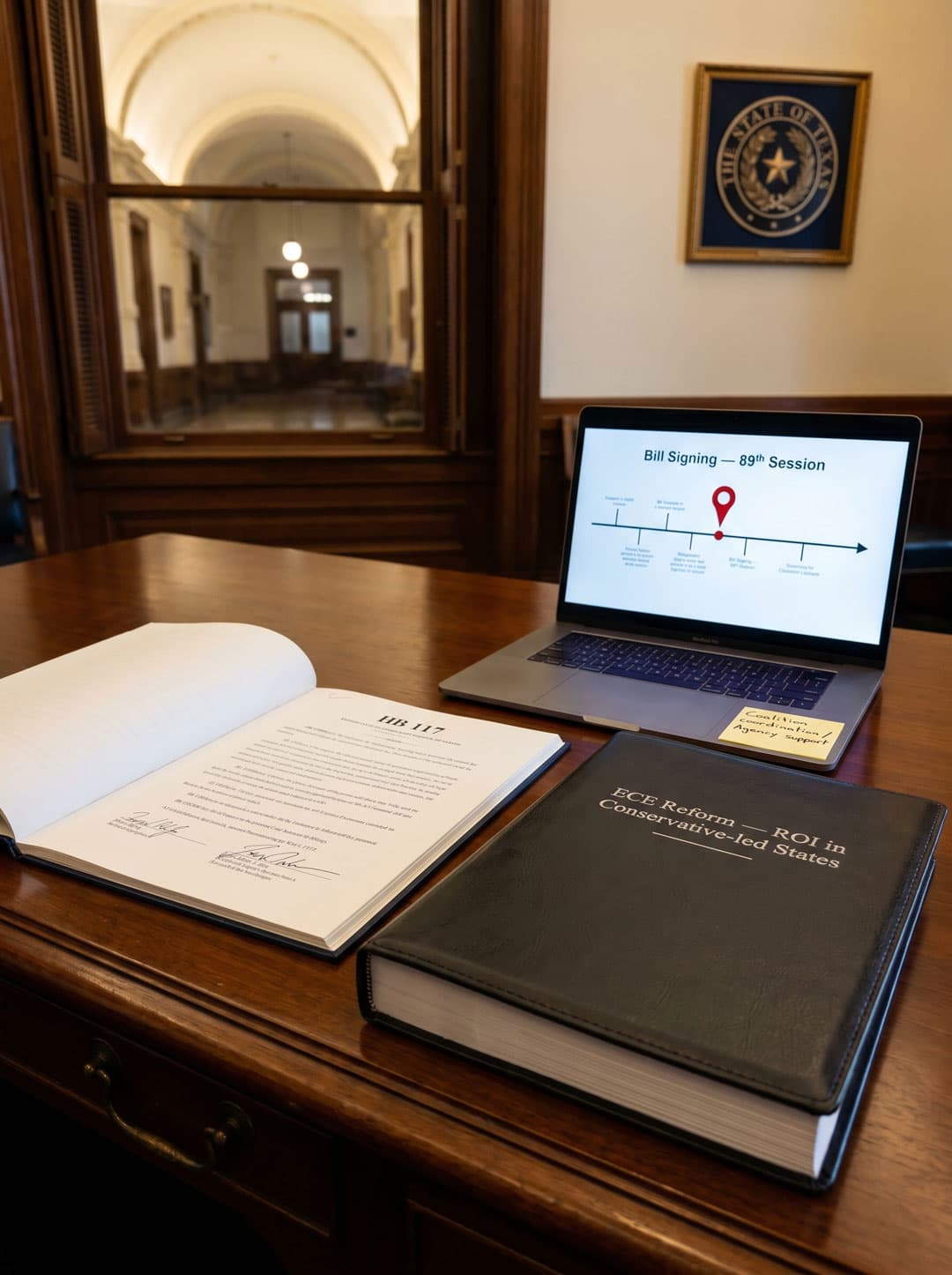
Colyandro Public Affairs’ work to advance HB 117 was the culmination of a multi-year strategy that began with CPA-led conversations with the Office of the Governor more than three years ago when the proposal to create an ECE Task Force was first proposed. These conversations were grounded in research by the TELC and informed by reform efforts in other conservative-led states moving toward more unified systems that led to positive return on investments. We translated that research into an actionable policy strategy through legislator support; ultimately helping secure a priority bill number and early legislative traction.
Throughout the 89th session (2025), we drove engagement on HB 117 in committee hearings, conducting targeted follow-ups to address member questions to provide clarity, and equipping legislative staff with the information needed to build member confidence and support. We worked closely with state leadership to navigate the bill through the legislative process, resulting in a public bill signing including the Governor, legislative bill authors, community members, which signaled strong commitment to address the issue.
In parallel, we developed and coordinated a coalition to support Task Force member appointments while providing agency support for an established meeting cadence to maintain transparency, accountability, and momentum. Our team has provided proactive legislative follow-up at every stage, ensuring members remained informed and engaged as the policy advances, demonstrating our firm’s ability to integrate research, relationships, and execution into a successful legislative strategy.
Breakthrough Solution
Governor Greg Abbott’s appointment of ECE Governance and Care Task Force members marks a pivotal shift from incremental progress to deliberate system design. The Task Force is well-positioned to define a clear, actionable path forward that is evidence-based, aligned with legislative intent, and responsive to the needs of Texas families, providers, and the workforce.
The Task Force members are legislatively directed to examine governance and operational challenges in the early childhood education and care system, including federal and local child-care programs and regulations governing said programs. Members will focus on improving government efficiency by conducting comprehensive reviews of state agency responsibilities and consider methods for a large-scale redesign of program administration. Lastly, members will develop and recommend standards for high-quality PK programs. This effort creates a formal process for engagement and information sharing with legislative leaders and stakeholders, ensuring a transparent and accountable process leading into the 90th legislative session.
The result is a meaningful opportunity to design a more coherent, efficient, and investable early childhood system that not only improves coordination and performance but also positions Texas as a national leader in delivering long-term impact for children, families, and the state’s economy.

Main Takeaways
Tackled fragmented governanceTexas’s early childhood education system was spread across 9 state agencies with no single entity accountable, creating disjointed access for parents, inconsistent kindergarten readiness and duplicative regulation for providers.
Multi-year strategy, not a session playCPA opened conversations with the Office of the Governor more than three years before HB 117 was filed, laying the groundwork for the Task Force proposal well ahead of the 89th session.
Turned research into legislationCPA translated TELC findings and reform models from other conservative-led states into an actionable policy framework, which ultimately helped secure a priority bill number and early legislative traction.
Drove the bill through the 89th sessionEngagement in committee hearings, targeted follow-ups on member questions, and briefings to legislative staff culminated in a public bill signing with Governor Abbott, bill authors, and community members.
Built the coalition behind the Task ForceCPA coordinated a coalition to support Task Force member appointments and continues to provide agency support and proactive legislative follow-up — maintaining cadence, transparency, and momentum heading into the 90th session.